On the epistemological dissolution of a supposed object
Even the moving image is not a moving empirical thing.
Edmund Husserl
The assertion that art does not exist seems to be a paradoxical imposition on a millennia-old practice of human expression. Temples, tragedies, symphonies, paintings—all of these seem to denote a sphere that is categorically different from mere utilitarian objects. And yet, in epistemological terms, it can be shown that art is not an ontologically independent realm, but rather a tautological metonymy of states of consciousness that are sublimated aesthetically and made worldly. What we call art is not an object among objects, but rather the symbolic self-reference of consciousness to its own modes of experience.
It can be said that this thesis can be derived genealogically from the history of human cognition, consciousness, and expression.
Does art exist as an object?
From an epistemological point of view, it is advisable to distinguish between what exists and what is valid. Art, after all, does not appear as a natural species (species naturalis), such as a chemical element or a biological organ. It is not a property inherent to an object. A painted canvas is not physically different from a painted street sign. It is only through attribution—through intentional framing—that something qualifies as an artwork.
However, the attribution does not refer, as we believe, to an objective property of the object, but to a certain mode of consciousness of the viewer. The art status is a function of intentionality. Thus, art is not an ontological but a transcendental concept: it describes the way in which consciousness recognizes and organizes itself in its products.
This is the point at which we find ourselves with our own remarks: within consciousness itself.
When we say, “This is art,” we thereby implicitly say, “In this object, I encounter an externalized state of consciousness that I experience as meaningful, condensed, symbolic, or aesthetic.” The term art appears here as a so-called metonymy: it stands for the mental state that manifests itself in the object. And it is tautological because we recognize the object as art precisely because we already experience in it the aesthetic condensation that we identify with art. Art is not a concept, but what we experience as art. That is, we experience ourselves.
From stimulus to self-reference
In the early cognitive development of humans—both phylogenetically and ontogenetically—sensory stimulus processing is at the forefront. Perception serves orientation and survival. Only with the steady development of symbolic competence (language, myth, ritual) does a second order of reality processing emerge: representation.
The decisive step here is not imitation (mimesis), but the decoupling from immediate functionality. A sign no longer refers merely to a practical purpose, but to a meaning. This capacity for meaning is the semiotic origin of what later came to be called art.
But here, too, the object itself does not carry any artistry within it. It is consciousness that externalizes its own structure in symbolic representation. A cave painting is initially a trace, a mark, a symbolic condensation of an experience. Only in reflexive consciousness is it understood as an expression of an inner state—it is felt as a distinct, solipsistic reality.
The development of cognitive history thus leads to an increasing, evolutionarily driven self-referentiality: consciousness becomes capable of observing its own states. Art arises where this self-observation is carried out not only conceptually, but also sensually and symbolically. It is therefore not an independent realm, but the solipsistic form of a metacognitive reflection, in which we consciously observe and analyze our own thinking, learning, and acting. Put simply, it means: thinking about one’s own thinking.
The aestheticization of inner life
With the historical development of individual subjectivity—this occurs especially in modern times—the focus shifts from the cosmological order to the inner self. The concept of individuation emerges. Romanticism, for example, discovers inner life as the source of authenticity. The artwork thus becomes the privileged medium of subjective truth.
But this is precisely where the tautology becomes apparent: consciousness seeks itself in the object. It externalizes its moods, conflicts, and desires—and recognizes them in the work. The object becomes the carrier of a state of mind. Art is therefore not a thing, but an event of sublimated recognition of itself.
The aesthetic act is a circle: consciousness projects its structure onto an object and takes it back in a transformed form. This recursivity is not deficient, but constitutive. It makes it clear that art is a relation—a specific configuration of consciousness, object, and horizon of interpretation.
In this respect, art does not exist independently of consciousness. It is not a sphere alongside religion, science, or morality, but a specific way of self-realization of the mind.
From the outside of the form
Expression is the elementary form of self-expression. It seems self-evident that the cry of an infant is not art, but an immediate affect. But even here, the basic pattern is already apparent: an inner state is shifted to the outside.
With increasing cultural complexity, expression becomes formalized. Rhythm, ornament, narration—all these are techniques for structuring inner states. Form does not arise from the material, but from the necessity of making the indeterminate determinable.
This means that art is a historically established name for highly formalized expression. But here, too, the core remains the same: it is the aesthetic secularization of states of consciousness. In his theory of ideas, Plato ascribed an idealic character to their “truth”—but art, in his understanding, was not meant by this.
The history of art is therefore less a history of styles than a history of the evolutionary self-relationships of consciousness. Each epoch articulates differently how it understands itself. The work is a document of a state of consciousness, of a universal abstractum, not the bearer of an ontologically independent quality.
The longing for the absolutely foreign
If art is nothing more than the aesthetic self-objectification of consciousness, why does it often appear radically foreign, even disturbing, to us?
Here we touch on the paradoxical core of our existence: consciousness is never completely transparent to itself. It is both subject and object, origin and appearance. In its own creations, it therefore encounters what it cannot completely control—the unconscious, the non-identical, the not yet thought.
Our longing for the absolutely foreign is in truth a longing for the untapped part of our own consciousness. In the work, we seek what we ourselves are not yet, but could be. The fear of the absolutely foreign (aF), on the other hand, springs from the suspicion that this other is not an external entity, but a dimension of our own self that—similar to artistic abstractions—can make itself worldly in the form of distortions toward an unknown vanishing point.
The absolutely foreign is not the other, but consciousness in its own abysmal nature. Art—as an aesthetic encounter with oneself—exposes us to this abyss. That is why it fascinates and threatens us at the same time.
Implications
The de-substantialization of art
If art has no independent existence, the dispute over its “value” loses its socio-ontological relevance—and with it its mercantilized physis. What is decisive is not the work as an object, but the quality of the encounter of consciousness that it enables—an experience of self-foreignness of which we have already spoken. A capital market would be fundamentally excluded and would contradict what it purports to be.
The responsibility of the recipient
Since art is a relation, its reality does not lie solely with the producer. The viewer, too, is a co-constituent. Aesthetic experience—the expressionist promise of artistic aesthetics—is an act of active self-interpretation of consciousness. And when we speak of states of mind, then especially of a different aesthetic episteme, one that is urgently needed.
The dissolution of the myth of genius
The “genius” appears as a particularly permeable intersection of collective and individual structures of consciousness. It does not create ex nihilo (as long as it is not clear where and what “consciousness” actually really is and why it can transcend itself…), but rather forms condensations of subjectively communalized mental states.
The ethics of the foreign
If the absolutely foreign is rooted in consciousness itself, then every encounter with aesthetic otherness is an exercise in self-transcendence. Fear of the foreign can be transformed into productive self-questioning.
Conclusion
There is no such thing as art—insofar as we understand it to be an ontologically independent sphere. What exists is consciousness, which interprets itself in forms, unfolds itself in symbols, and encounters itself in aesthetic configurations. As a form of self-foreignness experience—the reflection of a prenatal, incubatory determination of consciousness itself—(a further complicated aspect that, in my view, goes beyond the discursive scope here…)
Art is the name for this process of self-worlding. It is neither mere deception nor mere object, but an event of self-reference. In it, consciousness seeks what it is and at the same time fears what it could be, and brings it into view in worldly form.
Thus, art—precisely in its non-existence—remains an indispensable mode of human self-understanding: not as a thing, but as a mirror; not as substance, but as movement. Even more than a vectorial dispositif of consciousness, more precisely: as one’s own, as yet ununderstood strangeness of the inner self.
I.The preliminary question
II.History of cognition
III.History of consciousness
IV.History of expression
V.The longing for the absolutely foreign
VI.Implications
Context: This essay is the companion text to the video installation FLOOR / gradually moving shades (Heiner H. Hoier, 2018), Volumen I /01 in the Hoier.works Network, where it is also presented.
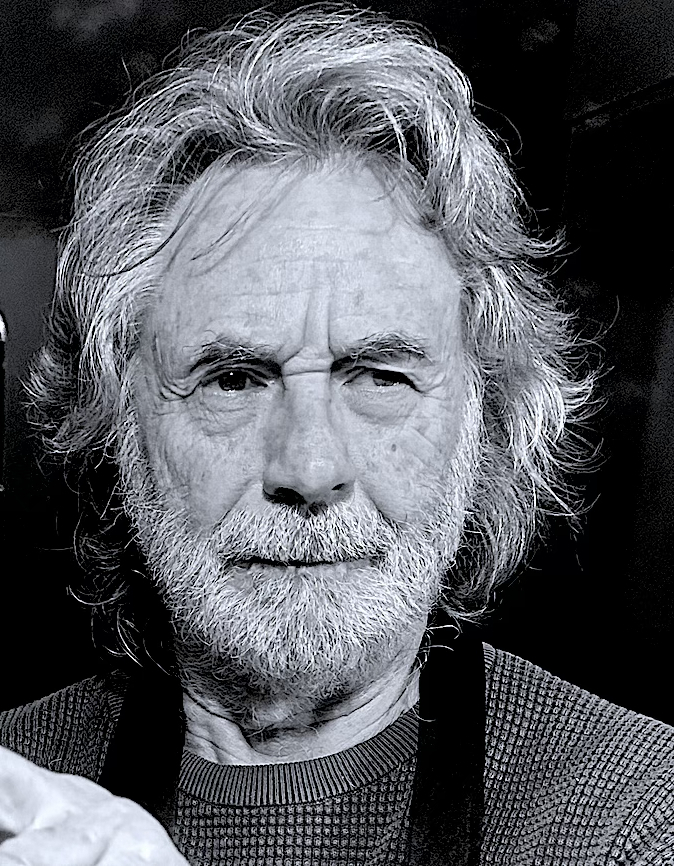
… studied graphic design and painting at the University of the Arts Bremen. He received national and international awards and held professorships at Hochschule Niederrhein and Munich University of Applied Sciences. Today he lives and works in Hamburg and Zurich.
~/hoier.works/
“Art” doesn’t exist. — On the epistemological dissolution of a supposed object
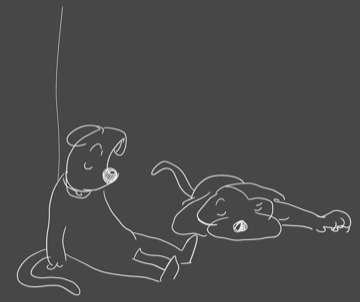
Philosophical essay by Heiner H. Hoier. The thesis: art is not an ontologically independent realm, but a tautological metonymy of states of consciousness — the symbolic self-reference of consciousness to its own modes of experience. An epistemological dissolution of the supposed object called art: from the history of cognition and consciousness through the aestheticization of inner life to the longing for the absolutely foreign. Published as ART WORD EDITION / 1, Volumen III (Position 02), in the "Unlimited Art Plateaus" series by SLEEPING DOGS UNLIMITED ART PLATEAUS. Companion text to the video installation FLOOR / gradually moving shades in the Hoier.works Network.
Philosophischer Essay von Heiner H. Hoier. Die These: „Kunst" ist kein ontologisch eigenständiger Bereich, sondern eine tautologische Metonymie von Bewusstseinszuständen — die symbolische Selbstreferenz des Bewusstseins auf seine eigenen Modi des Erlebens. Eine erkenntnistheoretische Auflösung des vermeintlichen Gegenstandes „Kunst": von der Kognitions- und Bewusstseinsgeschichte über die Ästhetisierung der Innerlichkeit bis zur Sehnsucht nach dem absolut Fremden. Publiziert als ART WORD EDITION / 1, Volumen III (Position 02), Reihe „Unlimited Art Plateaus" des SLEEPING DOGS UNLIMITED ART PLATEAUS. Begleitende Schrift zur Videoinstallation FLOOR / gradually moving shades im Hoier.works Netzwerk.
Technical Details
Title
“Art” doesn’t exist.
Subtitle
On the epistemological dissolution of a supposed object / Zur erkenntnistheoretischen Auflösung eines vermeintlichen Gegenstandes
The ART WORD EDITION is the textual sister-series to the visual work groups in the Hoier.works Network. “Kunst. Gibt es nicht.” (“Art doesn’t exist.”) opens the series as an epistemological dissolution of the concept of art — art not as a thing, but as an event of the self-reference of consciousness. The text accompanies the video installation FLOOR / gradually moving shades. Curatorial direction: Erika Margrit Fröhli.
Die ART WORD EDITION ist die textliche Schwester-Reihe der visuellen Werkgruppen im Hoier.works Netzwerk. „Kunst. Gibt es nicht." eröffnet die Reihe als erkenntnistheoretische Auflösung des Kunstbegriffs — Kunst nicht als Ding, sondern als Ereignis der Selbstreferenz des Bewusstseins. Die Schrift begleitet die Videoinstallation FLOOR / gradually moving shades. Kuratorische Begleitung: Erika Margrit Fröhli.
Opening Quotation
Even the moving image is not a moving empirical thing.
— Edmund Husserl
Heiner H. Hoier
Heiner H. Hoier (born 1944 in Bremen, Germany) is a German draughtsman, painter, author and academic. He studied graphic arts and painting at the University of the Arts Bremen (Hochschule für Künste Bremen) and was Professor at the Munich University of Applied Sciences (Hochschule für angewandte Wissenschaften München) from 1983 to 2005. His complete body of work is organised at hoier.works as a network of autonomous work groups.
As an author: Beyond his visual œuvre, Hoier has emerged since the 2020s as an essayistic writer. The ART WORD EDITION series gathers his textual reflections on instrumental reason, the history of consciousness, and art theory. “Kunst. Gibt es nicht.” opens this series as ART WORD EDITION / 1.
Heiner H. Hoier (* 1944, Bremen) ist ein deutscher Zeichner, Maler, Autor und Hochschullehrer. Er studierte Grafik und Malerei an der Hochschule für Künste Bremen und war Professor an der Hochschule für angewandte Wissenschaften München (1983–2005). Sein Gesamtwerk ist unter hoier.works als Netzwerk autonomer Werkgruppen organisiert.
Als Autor: Neben seinem visuellen Œuvre tritt Hoier seit den 2020er-Jahren als essayistischer Schriftsteller hervor. Die ART WORD EDITION-Reihe versammelt seine textlichen Reflexionen zu instrumenteller Vernunft, Bewusstseinsgeschichte und Kunsttheorie. „Kunst. Gibt es nicht." eröffnet diese Reihe als ART WORD EDITION / 1.
No user-data is captured. This site neither uses tracking technology nor cookies spread to foreign servers. Solely the browser's local storage and cache are used to maintain the application / workgroup logic.
Intellectual Property
This Web site, its structure, graphic charter, and content (text, trademarks, logos, photographs) constitute a work protected under the laws and regulations regarding copyrights and databases. Any reproduction, representation, publication, distribution, transmission or more generally, any unauthorized use of this Web site and the information contained on it is strictly forbidden and may be subject to legal proceedings.
Works in the Hoier.works Network
This text is part of Volumen III of Heiner H. Hoier's body of work, alongside the following related works: